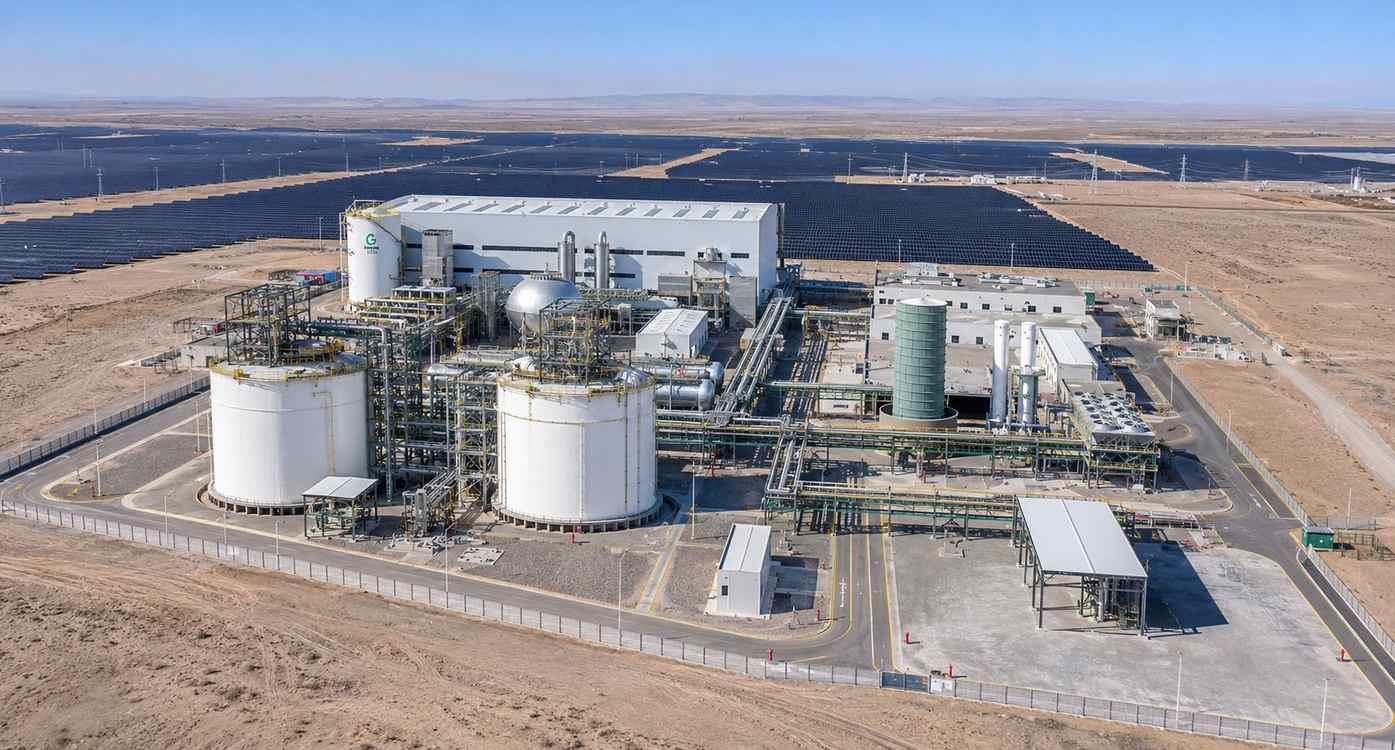
The world’s largest demonstration plant for a new kind of renewable energy storage is up and running in the west of the China. Called liquid-air energy storage (LAES) the plant uses renewable electricity to compress air to extreme densities until it turns to liquid. It can then be rapidly released to power a turbine and discharge that green energy back into the grid.
this is an old idea through, decades ago when i subscribed to Scientific American a front cover atory was about an idea was to use abandoned underground mines for massive compressed air storage that could be released to spin a turbines when needed. i e a battery
good to see the Chinese having a go though
Compressed air storage already exists. That’s different from liquid air storage.
The umbrella term is cryogenic energy storage, which handily clears up all this confusion
Totally agree, but for some reason when China does it, pro-China articles are posted in Technology, everyone acts like it’s new technology, and China is winning the science race.
… is up and running in the west of the China.
No. “in Chinas’ west ?” or " … ?" idk.
When electricity is plentiful, it powers machinery that draws in air, compresses it and cools it to extremely low temperatures of around -190°C. At this point, the air becomes a liquid, taking up far less space than it did as a gas.
No. Liquid fractions of gases from air readily separates. So O2(l), N2(l), Ar(g), and many other, each being much more valuable alone. Helium for example is very expensive.
(So, economically speaking, only the nitrogen should be expanded back to retrieve stored energy.)
in my opinion, this article could have been much better even if written by artificial intelligence.
It’s remote and it sounds like they’re not messing with separating the gas which costs more and needs more equipment and storage.
You are right but the article was wrong on the low temperature and “liquid air” point.
To know more i read a little bit here :
https://en.wikipedia.org/wiki/Compressed-air_energy_storage
it shows my comment was right as well.No, the entire point is that it’s a new liquid process type, not the traditional compressed only. That’s the news.
Some interesting science bits in this UK-based puff piece, if you’re interested in the tech:
If you go to pressured tanks, wouldn’t hydrogen via electrolysis/fuel cells be a more capable and efficient storage option? What’s the energy density compared?
Idk about the cryogenic/liquified part of it but h2(g) is really corrosive and notorious bad for all kinds of storages because of that. Also imo h2 isn’t the best storage because it is too valuable in industry processes, a good way to get rid of excess energy but not to feed energy back into the system.
The other part being the energy put into the electrolysis, yes h2 has more energy, but a whole extra process + buffer storage and turbines and compressors that are h2-able.
N2 is inert
Fair points, except for the value of H2, it really does not matter that much in a process that both produces and consumes it. The most efficient storage system, at least for anything that is more than just very short term is still pumping water up and let it flow down. It can also store immense amounts of energy given one has the geography to build such system. Which is also the main limitation. I guess we are looking for the second best storage system here.
I doubt that for day cycle compensation anything can beat battery systems. But the issue is seasonal storage.
H2 is used for many other products (steel reduction, ammonia), right now its produced from methane. If we were to replace methane with a green source (aka when green storage systems would also be a big part of the ecosystem) then we’d need to replace it or the price for anything would explode, because we can’t produce anything without steel nor ammonia.
So its not really of much value right now, but if we want to make everything CO2 neutral, then hydrogen will be expensive. So noone will just produce it and not sell it. At least that is my prediction.
That is all besides the point though in a process where H2 is both produced and consumed, as long as that process is competitive with other storage solutions. It appears it isn’t, even compared to air compression, as I found out in the meanwhile. However there is no technological reason why one would need some carbon source for producing H2. Electrolysis from water is a well established process.
That is all besides the point though in a process where H2 is both produced and consumed, as long as that
I wouldn’t produce 1g silver when I produce 1g gold in the process, I make more money with the gold,. Thats why it isn’t competitive.
It appears it isn’t, even compared to air compression,
efficiency of green hydrogen is low and storage of it is hard, fuel cell efficiency is also low I think it ends up with about a 20% efficiency but don’t quote me on that. Also you’d like to sell it to the industry anyways. But they take it from cheap gray sources right now so whatever.
However there is no technological reason why one would need some carbon source for producing H2. Electrolysis from water is a well established process.
The scales of electrolysis aren’t as big yet (maybe now idk, but 2-3 years ago they weren’t), compared to methane processes. They also don’t produce their own energy, they take energy instead! (Get 2 H2 from CH4 and burn the C to CO2, compared to electrolysis which takes energy)
If it were competitive to run that process for storage, H2 prices would take a dive. H2 prices are just a symptom, not the cause for H2 being not competitive for storage.
Fuel cell efficiency is certainly not commonly as low as 20%. As far as I understand it is commonly 40-60%.
Electrolysis requiring energy is the whole point of a storage technology.
Here your source. Well you were talking about H2 being the efficient option. There is energy efficiency, volumetric efficiency, life cycle (in the sense of how long does the plant last, wind turbines last for 20-25 years, how sustainable are the resources and are they recyclable), even plant space needed.
As it stands now H2 prices need to go up for it to make green H2 competitive. Idk what you are on about, milk prices are a symptom of farmers wanting enough compensation for their work, that’s why you find milk for different prices depending on the form of agriculture. More land for the cow and organic will mean its more expensive, you can’t make this any more competitive because it isn’t. Grey H2 also produces energy in production and you can’t compete with that, hence the price of H2 needs to go up e.g. via CO2 tax.
Storage storing energy is indeed the point of it, but the question is also how much money do you want to pay for the energy? Did you buy any oil recently?
Consuming the excess energy is also good, even if it never goes back when production is low.
If a factory that makes H2 all the time is converted to one that only makes H2 when there is excess energy, you turned an energy consumer into a grid stabilizer which in addition creates other kinds of value. It would serve the same purpose as a battery.
Since it went from being an energy consumer, to an excess-energy consumer. Consuming excess energy is good for the system, and you reduced demand when there is little supply, which is very similar to just increasing supply when there is little (what a battery does).
This goes for basically any product (that is not the bottleneck of course). You just pay for storage of that product instead of energy storage. You also need more production capacity though. Which is expensive since a machine that stays idle is just “being wasted”.