Turns out the sun has a few competitive advantages over nuclear: free fuel, no radioactive waste, and it doesn’t need a decade of permits before it starts shining. The real bottleneck now is grids and storage. Imagine losing the energy race to a giant fusion reactor 93 million miles away. 😎
Nuclear’s big selling point is that the sun goes down. Batteries have apparently missed that memo: they keep getting cheaper, better, and more efficient. Storage won’t solve every grid problem overnight, but pretending today’s limitations are permanent is a strange way to plan tomorrow’s energy system.
another big selling point of nuclear is it’s easy to drop in at old coal plants that already have grid connections ready to go.
pretending today’s limitations are permanent is a strange way to plan tomorrow’s energy system.
how long are you willing to wait for perfect energy storage?
obviously battery tech will improve, but the point is we cannot afford to assume that problem will be solved 100%, meanwhile experiencing more and more irreversible damage to our environment. We need to put our eggs into all clean energy baskets to get off CO2 as soon as possible. Not whenever battery tech happens to be ready to handle everything.
“it’s easy to drop at a place that has grid connections”
Funny, because solar or literally any other plant will also benefit from having existing connections, and all of them are easier and cheaper to build than nuclear.
Nobody’s asking us to bet on miracle batteries: Wind and solar paired with storage are already cheaper than building new nuclear. Reusing a coal plant’s grid connection doesn’t magically make a reactor cheap or quick to build. If speed and CO2 matter, follow the numbers, not the nostalgia.
No, in my world tomorrow’s grid uses whatever delivers reliable electricity at the lowest total cost: solar, wind, hydro, geothermal, storage, and yes, nuclear if it can compete. This isn’t a religion with approved energy sources. It’s an engineering problem with a price tag, and nobody gets bonus points for glowing in the dark.
Exactly, this is an engineering problem. You’re talking it like it’s an accounting one. Reliability, emergency use, redundancy, generating potential and universal scalability are the most important factors. Cost is a completely separate issue governed by separate factors, many of which are 100% artificial.
Cost is the single largest factor in the deployment of new power plants, and solar is just impossible to match right now.
You could spend literally decades and billions building a nuclear plant, or start deploying solar right this minute and immediately reap the rewards of that investment.
You could say that the numbers scribbled down on pieces of paper next to a dollar sign are artificial or miscalculated, but the invested manpower and resources and time (and a large number of other consequences) are all very real, and translate into a cost.
yes i know that, genius. the point is that is not an argument people are using for nuclear. it’s a blatant straw man from someone clearly not engaging in a goood faith discussion.
That’s kind of the point; it’s not a straw man, it’s saying that the options should be considered on their merits not on irrelevancies. “There are no bonus points added to the scoring just because nuclear looks cool when it glows”
Nuclear is simply incompatible with renewables, if the price tag is of any concern to you. Nuclear reactors take long and cost a lot to build, still aren’t cheap to operate if you include the infrastructure cost of getting, handling and storing the fuel, can’t respond to changing demand quickly and are centralized.
Nuclear power plants need subsidies over their whole life, mainly to handle the risk inherent with nuclear fuel and the finincial risk of having to handle spent fuel for centuries to come.
Nuclear power plants need to run at full power, which costs money every time renewables are pushing the energy price into the negatives.
Nuclear power plants need a centralized power grid.
Renewables work in exactly the opposite way. They are cheap to build and maintain, they are variable and decentralized. So to use renewables effectively, you need to build a decentralized grid and ideally on-premise energy storage.
Renewable energy simply wins in terms of cost, risk-management and scalability. So the energy grid of the future will be purpose-built to accomodate renewable energy. Trying to force nuclear energy generation into that mix only makes sense, if you have a clear, non-monetary reason to do so, like enriching uranium for bombs. For strictly commercial use, nuclear power is dead.
Take Germany that has solar and wind combined production capacity between 4 and 5 time its needs in electricity. Yet, It can not cover its needs. If you cannot produce electricity to cover your needs, you are far from being able to store an excess of your production. The last solar farm Germany was building south of Berlin had an estimated efficiency of 10%… The capacity of the power grid isn’t a light issue, and it is far from being resolved.
So before thinking about having a full working renewable power grid, you have to rely on a working mass production system. Germany choose coal and gas, which makes their emission of CO2 for producing electricity high during most of the year
Now take France. It has a solid capacity of electricity based on nuclear. It is among the least CO2 emitter in the world to produce electricity.
Now, if their energetic politics was a future oriented one, France would ramp up its renewable capacity while maintaining its nuclear capacity (so building new reactors to replace old ones) to not loose on stability.
Nuclear isn’t the energy of the past, nor a nostalgic one. It is probably the most efficient mass production system for electricity we have to transitionning to renewable while not messing up the CO2 emissions.
Not all countries have ideal solar exposition, nor constant wind… Not to mention that hydroelectricity requires land specifics advantages and geothermal energy isn’t an everywhere solution, as drilling can cause problems.
There is no miracle solution, only partially satisfying ones.
Most of the country that have a 100% or near 100% renewable power grid rely on hydroelectricity. Which is not achievable by all.
It’s not a race between technologies, it is a race to find the most efficient way to produce low CO2 electricity… while maintaining the confort of people and factory productivity, because, you know… Shareholders are the most important thing in the world… Apparently…
Searching for Germany, I see many articles on grid storage - basically at its infancy but exploding in popularity. I also see huge expectations on pumped hydro storage
Seems like you’re arguing that we should stop building out these proven, low cost solutions in favor of dumping tons more money into a problematic technology that will take decades and billions of dollarseach
The hydro storage has the same problem than the battery storage. You have to build a reliable eletricity production that cover your needs before being able to store your excess.
How much power can you store with hydro storage ? Do you have enough land/mountain to create the artifical lakes at different elevation ? Can you store enough energy to compensate the reduced production of solar power during winter ?
For now, storage is either for short periode ,(days, maybe weeks, with batteries) or limited capacity (hydro pumping).
If you are interested on storage technology you should look on the CO2 storage that Italy built lately.
It is complicated to rely on yet to develop technologies to power an entire country. Some can, they should, other can’t, and have to rely on non renewable energy.
I’ve written than Nuclear is probably the best way to produced decarbonated electricity while waiting for good solutions for the renewable energy. I’ve never said that we should stop developping renewable.
While the world spend money on an energy and water consuming technoloy like IA, it would be way more intelligent to focuse all that money on developping renewable… Yet to produce solar panel, wind turbin, concrete, we still need fossile fuel or nuclear. So giving up on it would only make things more complicated.
that disregards the massive time commitment needed to build out nuclear. When each plant takes over a decade to build and there is no ready supply chain, they can’t be mass produced, scaling out would take many many years
while also ignoring that even the fast solar buildout takes time. Even with ready supply chain, mass production, mature technology, we need to expect scaling out to take 20+ years. We may not have all the answers for storage yet but it’s all known technology and we have 20+ years to figure it out. It’s ok to lag behind solar a bit


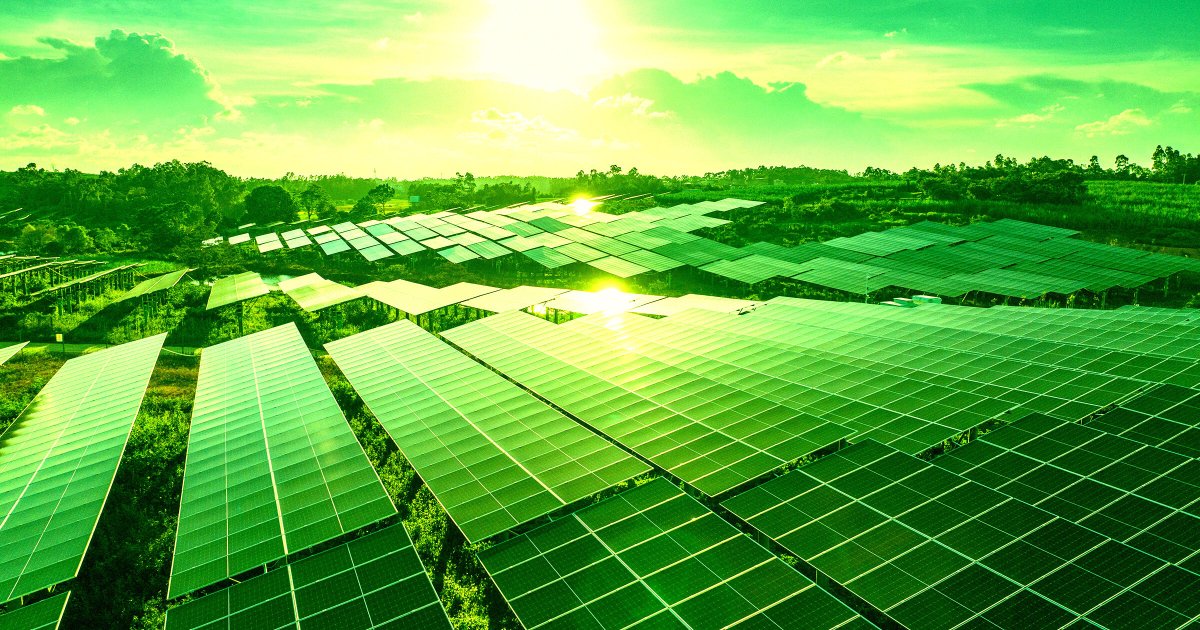
Turns out the sun has a few competitive advantages over nuclear: free fuel, no radioactive waste, and it doesn’t need a decade of permits before it starts shining. The real bottleneck now is grids and storage. Imagine losing the energy race to a giant fusion reactor 93 million miles away. 😎
And turns out nuclear has a few competitive advantages over solar. They are both great and serve different purposes.
Nuclear’s big selling point is that the sun goes down. Batteries have apparently missed that memo: they keep getting cheaper, better, and more efficient. Storage won’t solve every grid problem overnight, but pretending today’s limitations are permanent is a strange way to plan tomorrow’s energy system.
another big selling point of nuclear is it’s easy to drop in at old coal plants that already have grid connections ready to go.
how long are you willing to wait for perfect energy storage?
obviously battery tech will improve, but the point is we cannot afford to assume that problem will be solved 100%, meanwhile experiencing more and more irreversible damage to our environment. We need to put our eggs into all clean energy baskets to get off CO2 as soon as possible. Not whenever battery tech happens to be ready to handle everything.
“it’s easy to drop at a place that has grid connections”
Funny, because solar or literally any other plant will also benefit from having existing connections, and all of them are easier and cheaper to build than nuclear.
Nuclear is dead but for niche applications.
Nobody’s asking us to bet on miracle batteries: Wind and solar paired with storage are already cheaper than building new nuclear. Reusing a coal plant’s grid connection doesn’t magically make a reactor cheap or quick to build. If speed and CO2 matter, follow the numbers, not the nostalgia.
“Cheaper” is not the most important metric.
In your world, is “tomorrow’s energy system” exclusively solar/hydro?
No, in my world tomorrow’s grid uses whatever delivers reliable electricity at the lowest total cost: solar, wind, hydro, geothermal, storage, and yes, nuclear if it can compete. This isn’t a religion with approved energy sources. It’s an engineering problem with a price tag, and nobody gets bonus points for glowing in the dark.
Exactly, this is an engineering problem. You’re talking it like it’s an accounting one. Reliability, emergency use, redundancy, generating potential and universal scalability are the most important factors. Cost is a completely separate issue governed by separate factors, many of which are 100% artificial.
You’re stringing worlds together at this point.
Cost is the single largest factor in the deployment of new power plants, and solar is just impossible to match right now.
You could spend literally decades and billions building a nuclear plant, or start deploying solar right this minute and immediately reap the rewards of that investment.
It’s a no-brainer.
But it doesn’t need to be one or the other. The more diverse the grid the better. I’ll also say again, cost on both sides is mostly artificial anyway.
Again, you’re stringing words together.
Cost is a very real measure.
You could say that the numbers scribbled down on pieces of paper next to a dollar sign are artificial or miscalculated, but the invested manpower and resources and time (and a large number of other consequences) are all very real, and translate into a cost.
Dude, the cost is the final decision point after all those concerns are handled…
where the fuck did anybody say that?
“Glowing in the dark” refers to nuclear power sources. Hope this helps.
yes i know that, genius. the point is that is not an argument people are using for nuclear. it’s a blatant straw man from someone clearly not engaging in a goood faith discussion.
That’s kind of the point; it’s not a straw man, it’s saying that the options should be considered on their merits not on irrelevancies. “There are no bonus points added to the scoring just because nuclear looks cool when it glows”
Nuclear is simply incompatible with renewables, if the price tag is of any concern to you. Nuclear reactors take long and cost a lot to build, still aren’t cheap to operate if you include the infrastructure cost of getting, handling and storing the fuel, can’t respond to changing demand quickly and are centralized.
Nuclear power plants need subsidies over their whole life, mainly to handle the risk inherent with nuclear fuel and the finincial risk of having to handle spent fuel for centuries to come. Nuclear power plants need to run at full power, which costs money every time renewables are pushing the energy price into the negatives. Nuclear power plants need a centralized power grid.
Renewables work in exactly the opposite way. They are cheap to build and maintain, they are variable and decentralized. So to use renewables effectively, you need to build a decentralized grid and ideally on-premise energy storage.
Renewable energy simply wins in terms of cost, risk-management and scalability. So the energy grid of the future will be purpose-built to accomodate renewable energy. Trying to force nuclear energy generation into that mix only makes sense, if you have a clear, non-monetary reason to do so, like enriching uranium for bombs. For strictly commercial use, nuclear power is dead.
Take Germany that has solar and wind combined production capacity between 4 and 5 time its needs in electricity. Yet, It can not cover its needs. If you cannot produce electricity to cover your needs, you are far from being able to store an excess of your production. The last solar farm Germany was building south of Berlin had an estimated efficiency of 10%… The capacity of the power grid isn’t a light issue, and it is far from being resolved.
So before thinking about having a full working renewable power grid, you have to rely on a working mass production system. Germany choose coal and gas, which makes their emission of CO2 for producing electricity high during most of the year
Now take France. It has a solid capacity of electricity based on nuclear. It is among the least CO2 emitter in the world to produce electricity. Now, if their energetic politics was a future oriented one, France would ramp up its renewable capacity while maintaining its nuclear capacity (so building new reactors to replace old ones) to not loose on stability.
Nuclear isn’t the energy of the past, nor a nostalgic one. It is probably the most efficient mass production system for electricity we have to transitionning to renewable while not messing up the CO2 emissions.
Not all countries have ideal solar exposition, nor constant wind… Not to mention that hydroelectricity requires land specifics advantages and geothermal energy isn’t an everywhere solution, as drilling can cause problems.
There is no miracle solution, only partially satisfying ones.
Most of the country that have a 100% or near 100% renewable power grid rely on hydroelectricity. Which is not achievable by all.
It’s not a race between technologies, it is a race to find the most efficient way to produce low CO2 electricity… while maintaining the confort of people and factory productivity, because, you know… Shareholders are the most important thing in the world… Apparently…
Searching for Germany, I see many articles on grid storage - basically at its infancy but exploding in popularity. I also see huge expectations on pumped hydro storage
Seems like you’re arguing that we should stop building out these proven, low cost solutions in favor of dumping tons more money into a problematic technology that will take decades and billions of dollarseach
The hydro storage has the same problem than the battery storage. You have to build a reliable eletricity production that cover your needs before being able to store your excess.
How much power can you store with hydro storage ? Do you have enough land/mountain to create the artifical lakes at different elevation ? Can you store enough energy to compensate the reduced production of solar power during winter ? For now, storage is either for short periode ,(days, maybe weeks, with batteries) or limited capacity (hydro pumping). If you are interested on storage technology you should look on the CO2 storage that Italy built lately.
It is complicated to rely on yet to develop technologies to power an entire country. Some can, they should, other can’t, and have to rely on non renewable energy.
I’ve written than Nuclear is probably the best way to produced decarbonated electricity while waiting for good solutions for the renewable energy. I’ve never said that we should stop developping renewable. While the world spend money on an energy and water consuming technoloy like IA, it would be way more intelligent to focuse all that money on developping renewable… Yet to produce solar panel, wind turbin, concrete, we still need fossile fuel or nuclear. So giving up on it would only make things more complicated.
Time is the missing value here.
*long term storage, cause batteries are good for ~24 hrs